Sequencing becomes affordable
Advances in DNA sequencing allowed researchers to study gut microorganisms in far greater detail than earlier culture-based methods permitted.
Editorial team, Bralton
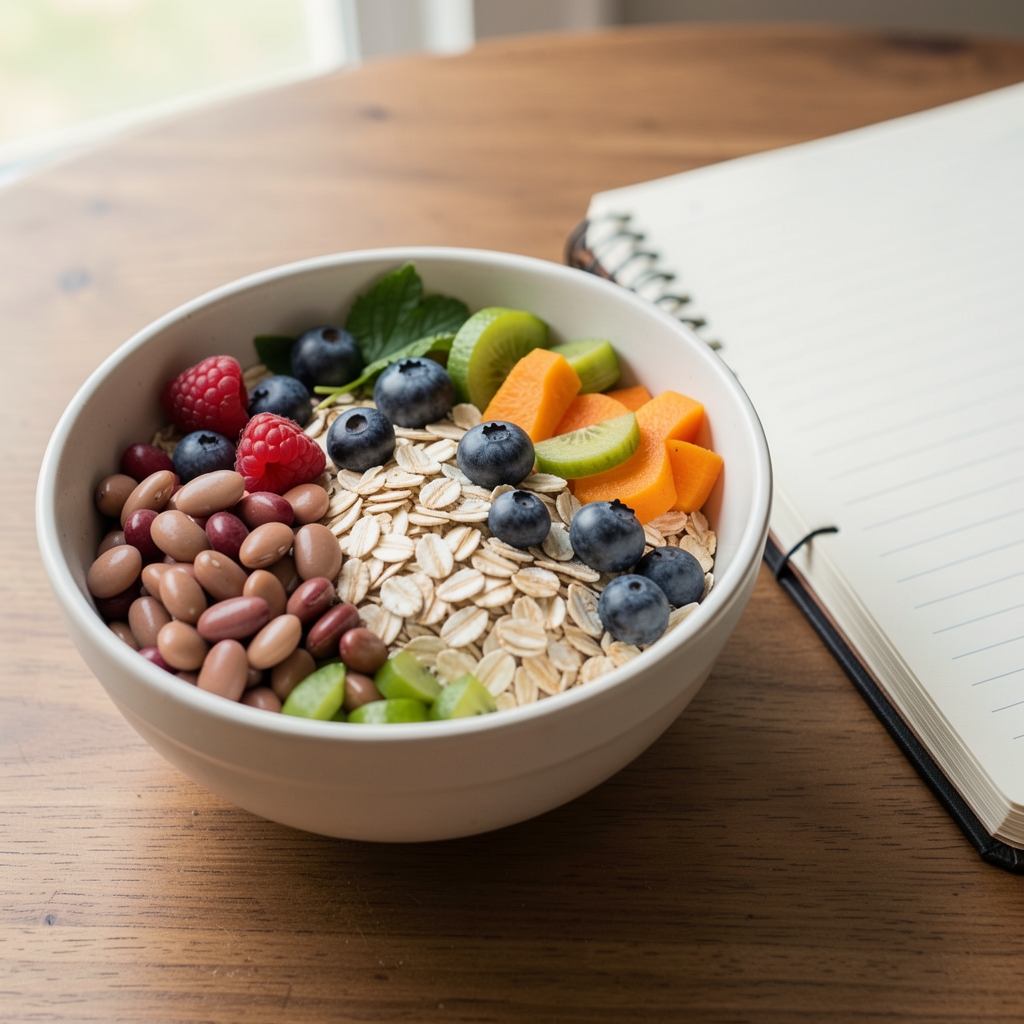
The gut microbiome is a subject of growing public interest, but the science is still developing. Researchers study communities of microorganisms, their relationship with food and the many factors that shape them. Men's wellbeing cannot be reduced to one gut metric. Eating patterns, movement, sleep, stress, household habits and access to food interact in complex ways. This overview explains the language without turning early findings into certainty. It is a starting point for reading, not an individual assessment.
Microbial diversity is described in several ways, and a higher number is not automatically a personal score to chase. Studies can use stool samples, dietary questionnaires and laboratory methods with different limits. Comparing research requires attention to those details, since a diversity index calculated from one sequencing method is not directly comparable to a figure produced by a different laboratory technique or population sample.
Advances in DNA sequencing allowed researchers to study gut microorganisms in far greater detail than earlier culture-based methods permitted.
Cohort studies started linking dietary patterns, particularly fibre intake, with measures of microbial diversity across thousands of participants.
Media coverage broadened, and terms such as "gut health" entered everyday conversation well ahead of firm independent consensus.
Current research increasingly highlights how much gut composition varies between individuals, complicating simple population-wide advice.
Beans, whole grains, vegetables, fruit, nuts and seeds provide fibre in different forms. A gradual increase in variety can make meals more interesting, especially when familiar recipes are adapted. Frozen and tinned foods can be useful, affordable parts of a varied kitchen, and swapping white rice for a tinned mixed bean salad a couple of times a week is a modest, low-cost way to introduce a wider range of fibre types without a full recipe overhaul.
Yoghurt, kefir, sauerkraut and other fermented foods are not interchangeable, and labels vary. Enjoyment, storage and tolerance matter. An editorial article should describe possibilities rather than present one food as essential, and a reader who finds a particular fermented food unappealing loses little by simply choosing a different fibre-rich option instead.
| Step | Suggested action | Why it's suggested this way |
|---|---|---|
| 1 | Add one new vegetable or pulse to an existing weekly meal | Gradual change tends to be more sustainable than a full dietary overhaul |
| 2 | Swap one refined grain portion for a wholegrain equivalent | Introduces additional fibre types without changing the whole meal |
| 3 | Try a fermented food you haven't had before, in a small amount | Allows you to gauge personal tolerance and preference before committing further |
| 4 | Keep a simple note of how meals feel over a few weeks | Personal observation over time is more informative than a single meal |
"Much of the published research in this area describes associations worth investigating further, not settled conclusions that translate directly into individual instructions."
— From the editorial notes accompanying this article
Much research in this field remains observational, meaning it can identify a pattern worth investigating without establishing that one factor causes another. Sample sizes, geography and methodology vary widely between studies, and a finding in one population does not automatically generalise to another. Readers who want to explore a claim further are encouraged to look at how a study was designed before treating a summary as a firm conclusion, and to discuss any specific digestive symptoms with a GP rather than relying on general reading alone.