Bean and vegetable stew
A tinned-pulse-based stew with seasonal vegetables and herbs, served with wholegrain bread.
Editorial team, Bralton
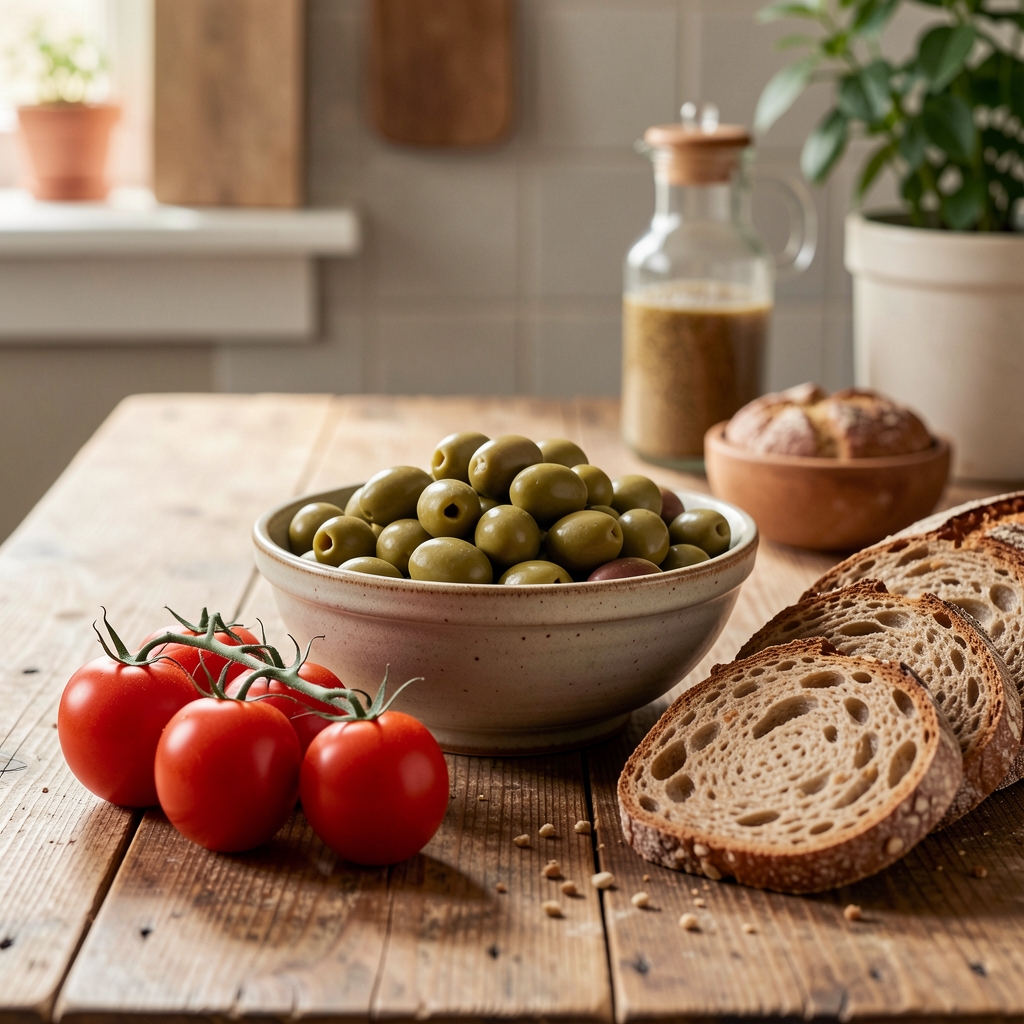
The Mediterranean diet is best understood as a food pattern rather than a strict menu. Research often describes vegetables, fruit, pulses, whole grains, nuts, olive oil, fish and shared meals, with other foods appearing in different amounts. Studies indicate associations between this pattern and several measures of wellbeing, but an association is not a personal promise. This editorial overview considers what researchers mean by the phrase, how British households might interpret it, and why context matters. It avoids turning a cultural tradition into a branded plan. The most useful question is often which elements are enjoyable, affordable and realistic for a particular household.
Traditional eating patterns vary by region, season and income. Olive oil is prominent in many descriptions, yet the wider idea includes cooking at home, plants, pulses and social connection. A UK reader could take inspiration without trying to reproduce every ingredient. Rapeseed oil, oats, barley, frozen vegetables and tinned beans can all belong in a varied kitchen, and substituting a locally available oil or grain for a traditionally Mediterranean one does not necessarily undermine the broader pattern being described in most research.
A typical week inspired by this pattern might include a bean-based stew, a fish supper, a big shared salad, and several meals built around wholegrains and vegetables rather than meat as the centrepiece. None of this requires imported ingredients or an unfamiliar shopping list.
Frozen vegetables, tinned pulses and seasonal British produce can stand in for fresher Mediterranean equivalents without meaningfully changing the pattern's broad structure, which is defined more by proportion and variety than by any single named ingredient.
A tinned-pulse-based stew with seasonal vegetables and herbs, served with wholegrain bread.
Oily or white fish alongside a generous mixed salad dressed with rapeseed or olive oil.
Barley or brown rice with roasted vegetables, nuts and a simple herb dressing.
A meal cooked and eaten with others, reflecting the social dimension frequently described alongside the food pattern itself.
| Study type | What it can show | What it cannot show on its own |
|---|---|---|
| Large cohort study | An association between a reported eating pattern and a measured outcome across many participants | That the pattern directly caused the outcome, rather than a related lifestyle factor |
| Food frequency questionnaire | A general picture of how often certain food groups are eaten | Precise portion sizes or day-to-day variation in an individual's diet |
| Short intervention trial | Changes over weeks or months among a defined group following specific guidance | Long-term outcomes over years, which require longer follow-up studies |
Large studies can identify patterns worth investigating, but they cannot explain every influence on a person's life. Activity, sleep, income, culture and access to food may all sit alongside diet. Researchers use food questionnaires and scores, each with limitations. Reading methods sections rather than headlines alone gives a more complete sense of what a given study can and cannot support, and comparing findings across several studies is generally more informative than relying on any single paper.
No; the broad pattern of plants, pulses, wholegrains and a favoured cooking oil can generally be reproduced with UK supermarket staples.
Most descriptions of the pattern include red meat in smaller or less frequent amounts rather than removing it entirely.
Individual circumstances, budgets and preferences vary, so treating this as general inspiration rather than a fixed plan tends to be more realistic.
Pulses, nuts and plant oils are also central to most descriptions of the pattern, so fish is not the only relevant food group.