Omega-3 Fatty Acids: Why They Matter for Men's Daily Nutrition
Editorial team, Bralton
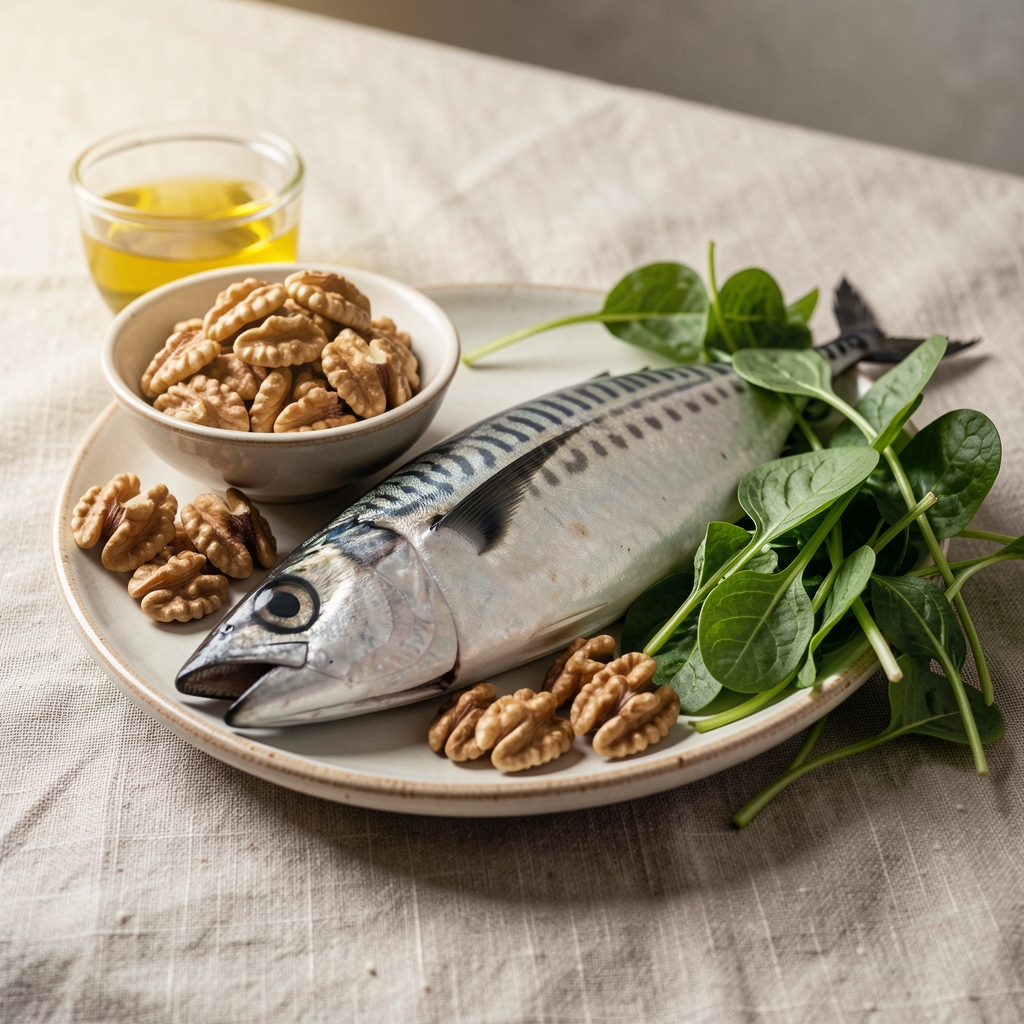
Omega-3 is a family name for several fatty acids found in foods and in the body. ALA, EPA and DHA are discussed differently in nutrition research, so a careful article should distinguish them. Fish, walnuts, seeds and some fortified foods may appear in a varied eating pattern. This overview looks at terminology, kitchen context and the way studies frame their questions. It does not turn a nutrient into a product recommendation. Readers can discuss individual circumstances with their GP or a qualified healthcare professional.
Three names worth knowing
ALA is found in some plant foods, while EPA and DHA are associated with seafood and certain algae sources. The body handles these fatty acids in different ways. Nutrition labels and articles may use the family name while describing a specific member, so checking the wording improves understanding. A label that says "omega-3" without specifying ALA, EPA or DHA is not incorrect, but it leaves out detail that changes how the figure should be read alongside other foods in a day.
Food-first context
Oily fish, walnuts, chia and linseeds can all add different textures to meals. A spoonful of seeds in oats, walnuts over a salad or fish with potatoes are ordinary examples. The wider meal still matters: fibre, vegetables, carbohydrate foods and enjoyment belong in the same conversation. A single ingredient rarely determines the overall balance of a meal, and rotating a handful of familiar dishes across a week is usually more sustainable than trying to include every source every day.
Key terms explained
- ALA (alpha-linolenic acid)
- A plant-based omega-3 fatty acid found in walnuts, rapeseed oil and linseeds.
- EPA (eicosapentaenoic acid)
- An omega-3 fatty acid associated with oily fish such as mackerel, sardines and salmon.
- DHA (docosahexaenoic acid)
- An omega-3 fatty acid found alongside EPA in seafood and in some algae-based foods.
- Fortified food
- A product to which a manufacturer has added a nutrient, such as omega-3-enriched eggs or spreads.
Approximate fatty acid content of common foods
| Food | Typical serving | Fatty acid type most discussed |
|---|---|---|
| Mackerel, cooked | ~100g fillet | EPA and DHA |
| Walnuts | ~30g, a small handful | ALA |
| Linseeds, ground | ~1 tablespoon | ALA |
| Rapeseed oil | ~1 tablespoon | ALA |
| Fortified eggs | 2 eggs | Varies by brand; check the label |
Figures are approximate and illustrative of typical UK food composition data rather than a personalised target. Product labels vary and should be checked directly.
A quick note on numbers
3
Named fatty acids commonly grouped under "omega-3" in nutrition writing
2×
Roughly how often oily fish appears in general UK population guidance discussions per week, as a point of reference rather than a target
1
Wider eating pattern that matters more than any single nutrient in isolation
How to read a study
Research may focus on dietary intake, blood measures or a particular population. One paper cannot answer every question. Look for the number of participants, length of observation and whether the authors describe limitations. Studies indicate association more often than they prove causation, and a headline summarising a single trial rarely captures the caveats found in its discussion section. Reading the abstract alongside the limitations paragraph, when available, gives a fuller picture than the headline alone.
Reading labels with confidence
UK food labels may state fatty acid content per 100g or per portion, and the two are not the same thing. Checking which basis is used before comparing two products avoids a common source of confusion. Where a product claims to be a "source of omega-3" or "high in omega-3," UK and EU nutrition and health claims regulation sets thresholds those wordings must meet, so readers can treat a compliant claim as regulated language rather than marketing shorthand.
Common questions
Do I need a supplement?
Food-first approaches are generally the starting point discussed in public guidance; a healthcare professional can advise whether a supplement is relevant to your circumstances.
Is plant-based ALA enough on its own?
Research discusses ALA, EPA and DHA differently, and conversion between them in the body is limited, which is why variety across food groups is often mentioned.
Does cooking method matter?
Frying at high temperatures for long periods may affect fat content differently to steaming or baking, though the overall meal pattern remains the larger factor.